
Spark Driver Earnings vs. Expenses is an essential topic for anyone considering this delivery job.
You need to understand how much you can actually keep after fuel, maintenance, and insurance.



This article breaks down both earnings and expenses, allowing you to determine if Spark Driver is worth it.
Overview of Spark Driver Jobs
Spark Driver is Walmart’s delivery program that connects drivers with customer orders.
You work as an independent contractor, not an employee. Below are the main points about how the job works:
- Platform Function – You receive delivery offers through the Spark Driver app.
- Types of Deliveries – Orders include groceries, general merchandise, and Express trips.
- Flexibility – You choose when and where to work.
- Independent Contractor – You are responsible for expenses, insurance, and taxes.
- Service Areas – Availability depends on Walmart store demand in your region.
Earnings Potential
Spark Driver pay depends on several factors, including the type of order, location, and customer tips.
You don’t earn a fixed wage, but you can increase your income through efficiency and strategic planning. Below are the main components of earnings:
- Base Pay – A set amount per delivery, varying by distance and complexity.
- Tips – Customers add tips that go directly to you.
- Incentives – Extra pay during busy hours or for completing specific batches.
- Average Range – Drivers often report $13–$20 per hour before expenses.
- Earning Factors – Location demand, number of completed deliveries, and peak times affect total pay.
Common Expenses
When you drive for Spark Driver, you pay for your own costs since you’re an independent contractor.
These expenses can quickly reduce your take-home income. Below are the most common costs you need to track:
- Fuel Costs – Daily gasoline or charging expenses, depending on your vehicle.
- Vehicle Maintenance – Oil changes, tires, brakes, and routine repairs.
- Insurance – Auto insurance premiums and possible rideshare coverage.
- Taxes – Self-employment tax and income tax owed on your earnings.
- Depreciation – Long-term loss of car value from heavy use.
- Phone and Data – Mobile plan expenses to run the Spark Driver app.
Earnings vs. Expenses Analysis
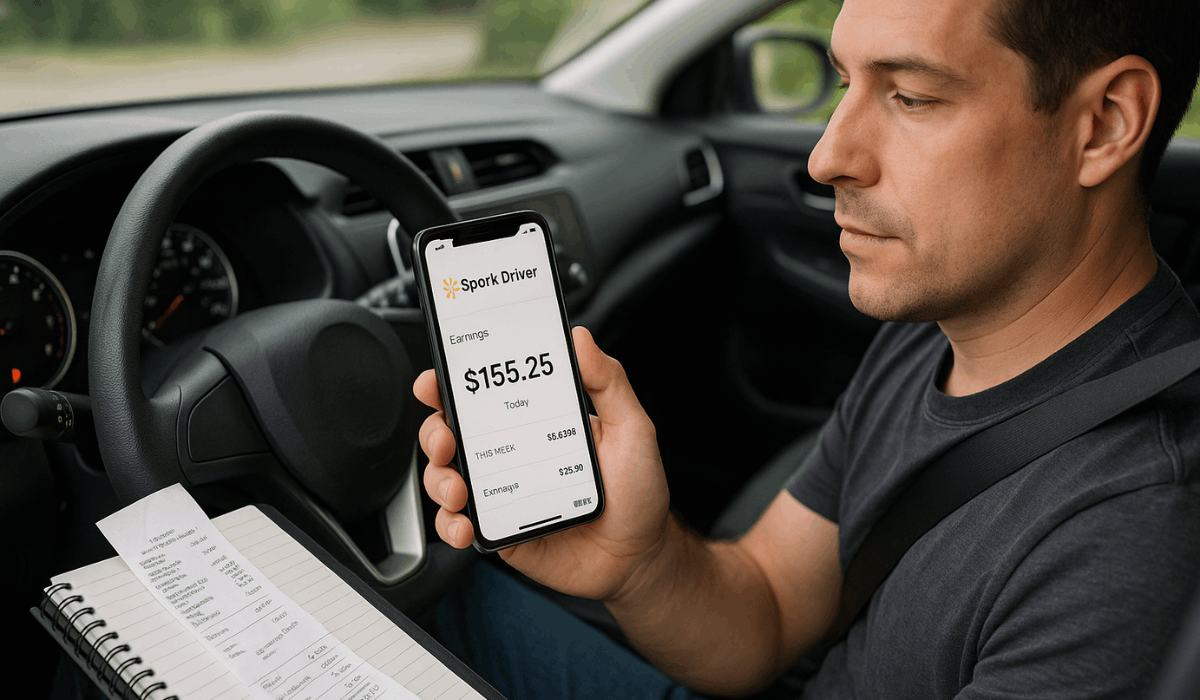
It’s essential to compare what you earn with what you spend as a Spark Driver. This helps you see your true profit and decide if the job is worth it.
Below are key points in analyzing earnings vs. expenses:
- Gross Earnings – Average drivers report $13–$20 per hour before costs.
- Fuel Impact – Fuel alone can cut earnings by 20–30% depending on mileage.
- Maintenance Costs – Frequent driving adds ongoing expenses that reduce profit.
- Net Income Range – After expenses, many drivers keep around $10–$15 per hour.
- Regional Variations – Urban areas with short trips may yield higher net pay than rural zones.
- Driver Habits – Efficient route planning and proper car care significantly impact final income.
Pros and Cons for Drivers
Delivery work has both advantages and challenges. Knowing these helps you decide if the job fits your needs. Below are the main pros and cons:
Pros
- Flexible scheduling lets you choose when to work.
- Direct customer tips can boost income.
- Independence as your own boss.
- Opportunity to earn extra money part-time.
Cons
- High expenses, such as fuel and maintenance, reduce profit.
- No benefits such as health insurance or paid leave.
- Income varies with demand and location.
- Extra wear and tear on your vehicle.
Tips to Maximize Earnings and Reduce Costs
You can improve your profit by working smarter and controlling expenses. Small changes in driving and planning make a big difference.
Below are practical tips:
- Plan Routes Efficiently – Utilize navigation apps to avoid traffic and reduce fuel consumption.
- Work Peak Hours – Deliver during busy times to earn higher pay and tips.
- Drive a Fuel-Efficient Vehicle – Lower fuel costs by using cars with good mileage.
- Track Expenses – Record mileage, fuel, and maintenance for budgeting and taxes.
- Maintain Your Car Regularly – Prevent expensive repairs with routine upkeep.
- Limit Idle Time – Avoid waiting around too long between deliveries.
Tax Considerations for Drivers
As an independent contractor, you handle your own taxes. Maintaining accurate records is crucial to prevent legal issues and minimize expenses.
Below are key tax points to know:
- Self-Employment Tax – You pay Social Security and Medicare contributions directly.
- Quarterly Payments – Taxes must often be paid quarterly, not just annually.
- Deductible Mileage – Track miles to claim deductions and lower taxable income.
- Expense Deductions – Fuel, maintenance, phone, and insurance may be deducted.
- Record Keeping – Save receipts and logs to support your tax filings.
- Professional Help – Consider using tax software or hiring an accountant.
Impact of Market Competition
Delivery platforms compete for both customers and drivers. This competition affects pay, demand, and overall job stability.
Below are the main impacts of market competition:
- Driver Supply – Having too many drivers in one area can reduce the number of available orders.
- Customer Demand – Competing apps may reduce the number of Walmart orders.
- Pay Rates – Platforms adjust incentives based on the market's competitiveness.
- Multi-apping – Many drivers use multiple apps (such as Uber Eats, DoorDash, and Instacart) to increase their earnings.
- Regional Variations – Some cities experience stronger demand, while smaller towns may face intense competition.
- Customer Loyalty – Discounts and promotions from rivals can divert orders.

Long-Term Sustainability of Driving as a Career
Working full-time in delivery comes with risks. Income stability and physical demands can affect long-term success.
Below are key points about sustainability:
- Income Variability – Pay depends on demand and can fluctuate week to week.
- Lack of Benefits – No health insurance, retirement plan, or paid leave is provided.
- Vehicle Wear – Heavy mileage shortens vehicle lifespan and raises costs.
- Physical Strain – Long hours of driving and lifting deliveries can cause fatigue.
- Career Growth – Limited opportunities for advancement compared to traditional jobs.
- Future Uncertainty – Technology and automation may reduce demand for drivers.
Safety and Insurance Concerns
Spark Drivers face both road safety issues and insurance responsibilities. Understanding these risks helps avoid costly problems.
Below are the main concerns:
- Road Safety – Frequent driving increases the risk of accidents.
- Delivery Risks – Working at night or in unfamiliar areas can pose safety risks.
- Auto Insurance – Personal auto policies may not fully cover delivery work.
- Rideshare Coverage – Some insurers require commercial or gig-driver add-ons.
- Accident Liability – Drivers are responsible for damages not covered by Walmart.
- Cost Impact – Higher insurance premiums reduce net earnings.
How to Apply
Applying is simple and done online through the Spark Driver platform.
You just need basic information, a vehicle, and insurance to get started. Below are the main steps:
- Sign Up Online – Visit the Spark Driver website or app and create an account.
- Provide Personal Information – Enter your name, contact details, and driver’s license.
- Background Check – Consent to a standard screening for driving and criminal history.
- Upload Documents – Submit proof of insurance and vehicle registration.
- App Setup – Download the Spark Driver app to accept delivery offers.
- Activation – Once approved, you can begin scheduling and accepting deliveries.
The Bottomline
Balancing Spark Driver Earnings vs. Expenses shows that profit depends on location, habits, and personal costs.
While the job offers flexibility, high expenses can reduce take-home income.
If you’re considering this path, review your budget carefully and start driving only if the numbers work in your favor.