
A Publix cashier starts around $14 per hour in 2026. That number lands below Target and Costco on most comparison charts. So why do over 200,000 employees hold an average of $57,405 in their Publix retirement stock accounts?
The gap between starting hourly rate and total compensation at Publix is wider than at almost any other grocery chain. Comparing base pay alone misses the single largest piece of the equation.



This one is for the first-time job seeker weighing Publix against other retail and grocery offers. If hourly wage is the only line you check, you will leave real money unexamined.
Publix Hourly Pay Rates Across Roles in 2026
The average Publix hourly pay sits at roughly $15.98 according to PayScale data from mid-2026, with a range of $12.53 to $21.30 depending on role and tenure. Entry-level positions start lower, and the ceiling rises with time and department placement.
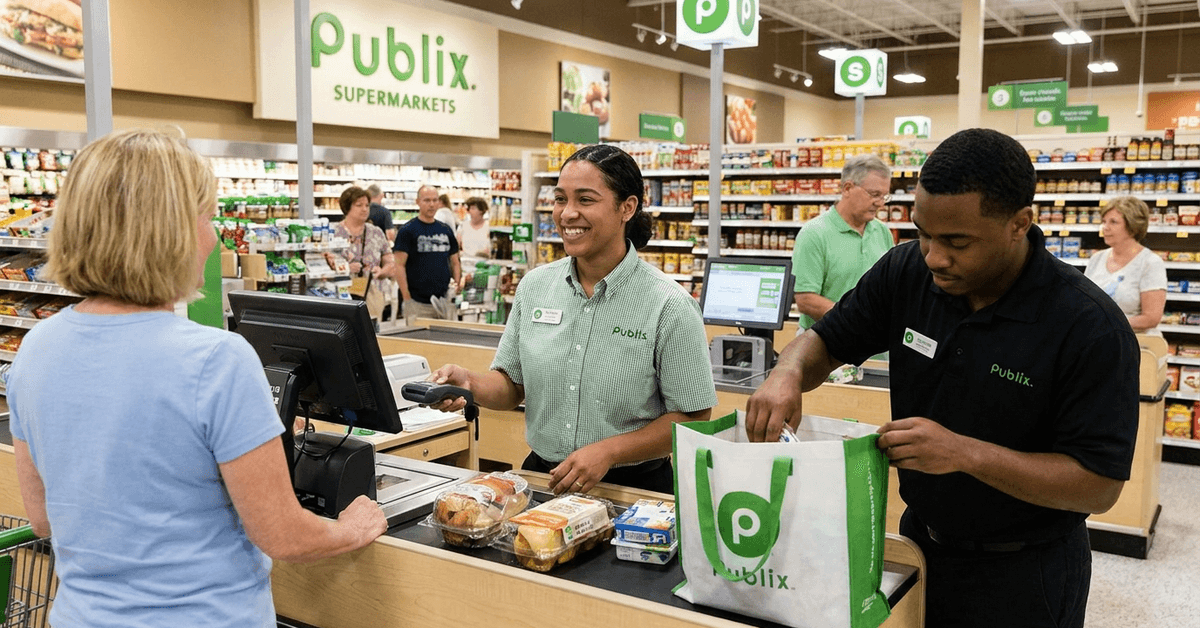
Bagger and Front-End Starting Pay
Baggers earn the lowest hourly rate at Publix, averaging about $12.80 per hour. Cashier roles come in slightly higher, with part-time cashiers averaging around $14 per hour based on Glassdoor salary reports through July 2026. Service clerks who help customers to their vehicles and handle returns sit in a similar range.
These numbers match or trail what Walmart, Kroger, and Aldi pay for identical work. No surprise there.
But front-end roles at Publix have a feature most competitors lack: performance-based raises every six months during the first few years. That $13 starting wage is not a fixed ceiling. It is a floor that moves.
Department and Specialty Roles
Deli clerks, bakery associates, and produce clerks typically earn $14 to $17 per hour, scaling with experience and how long they have been with the company.
Certified pharmacy technicians top the hourly chart at roughly $18.44 per hour on average. Department leads, bakers, and other specialty positions can reach $18 to $24+ depending on tenure and store location.
The jump between entry-level and department pay is real, but it takes patience. My take on the bakery and deli roles: I think the $14 to $17 range for deli clerks sounds modest until you factor in the six-month raise cycle and the ESOP contributions from Publix corporate. Those extras do not show up on a pay stub comparison.
The ESOP That Changes the Whole Compensation Picture
Publix is one of the largest employee-owned companies in the United States. That phrase gets thrown around a lot, but the mechanics behind it deserve a closer look, because they shift the math on whether Publix "pays enough."
How the PROFIT Plan Works
The PROFIT Plan is a non-contributory Employee Stock Ownership Plan. Publix contributes company stock into eligible employees' retirement accounts at zero cost to the employee. No paycheck deduction. No match requirement. The company just hands you shares.
To qualify, associates generally need to log around 1,000 hours in a plan year. Shares vest over a set period, so sticking around matters. Employees who leave early may forfeit unvested portions.
As of the end of 2024, the PROFIT Plan held $11.8 billion in total assets across roughly 205,737 participants. That works out to an average account balance of $57,405 per person. For a part-time grocery worker, that number is staggering.
Stock Price and Dividends in 2026
Publix stock is privately held. It does not trade on any exchange. The company sets its own price quarterly. As of May 1, 2026, the Publix stock price increased from $19.65 to $20.45 per share. The board also declared a quarterly dividend of 11.6 cents per share in Q1 2026.
Those dividends pay out as cash. There is no reinvestment plan. So an employee holding 1,000 shares collects $116 in dividends per quarter on top of any stock appreciation. I would argue that the ESOP makes Publix the single most misunderstood compensation package in grocery retail.
A cashier earning $14 an hour at Publix and a cashier earning $17 an hour at a competitor are not comparing equal deals if one of them is accumulating $5,000+ in free stock per year. The hourly rate comparison that every job board runs is incomplete. It ignores the largest piece of long-term pay.
Who the ESOP Does Not Help
Short-term employees miss out entirely. If you plan to work at Publix for one summer and move on, the ESOP does nothing for you. The vesting schedule and hour requirements create a clear dividing line.
Employees on limited part-time schedules may not hit the 1,000-hour threshold, which locks them out of annual allocations. So the stock benefit rewards a specific type of worker: someone who shows up consistently and stays for years.
The comparison below puts hourly rates and the stock factor side by side:
| Role | Avg. Hourly Pay (2026) | ESOP Eligible? | 6-Month Raise Cycle |
|---|---|---|---|
| Bagger | ~$12.80 | After 1,000 hrs/year | Yes |
| Cashier | ~$14.00 | After 1,000 hrs/year | Yes |
| Deli/Bakery Clerk | $14–$17 | After 1,000 hrs/year | Yes |
| Pharmacy Tech | ~$18.44 | After 1,000 hrs/year | Yes |
| Department Lead | $18–$24+ | After 1,000 hrs/year | Yes |
The takeaway: every role qualifies for free stock once the hours threshold is met, but reaching that threshold on a light part-time schedule can be difficult.
Benefits Beyond the Stock Plan
Publix runs a benefits package that is unusually broad for grocery retail, though not every perk kicks in on day one.
Full-time employees receive medical, dental, and vision insurance. Part-time associates may also qualify after a waiting period, which is uncommon in this industry.
A 401(k) plan (called SMART) with company match runs alongside the ESOP, giving employees two separate retirement vehicles.
Other perks worth scanning:
- Tuition reimbursement for job-related courses, though dollar limits apply
- Paid time off that accrues based on years of service
- Holiday pay for eligible employees, even during peak shopping periods
- Cell service and select product discounts (but no regular grocery discount, which is a strange omission for a grocery chain)
That missing grocery discount trips people up. A company that sells food does not give its employees a discount on food. I was surprised when I saw this confirmed across multiple employee review threads on Glassdoor.
Other chains like Kroger and Whole Foods offer 10% to 20% off. Publix does not. For workers buying groceries at the store where they clock in, that gap adds up to hundreds of dollars a year.
Promotion Speed and Upward Mobility
Internal promotion runs deep at Publix. Almost all store managers started as hourly associates. That pipeline is part of the company's identity, and the pattern holds across locations.
The Typical Promotion Path
Stock clerks and cashiers move into department supervisory roles. Department supervisors move into assistant manager training.
Assistant managers move into store management. Corporate roles exist but typically require relocation and sometimes additional education.
Mentoring programs and skill-building workshops are available, though the quality and frequency depend on which store you land in. A high-volume urban location might offer more structured training than a quiet suburban store.
The Slow Burn
The promotion timeline at Publix is not fast. Employees describe a culture that rewards patience and reliability above all else.
Rapid movers who expect yearly title changes will feel stuck. The six-month evaluation cycle creates visible checkpoints, but moving from clerk to supervisor can still take two to four years depending on openings.
That pace filters out people who want quick advancement. It also means the employees who do get promoted tend to know the operation cold.
What to Check Before Applying
A few things to look into before submitting an application:
- Ask the hiring manager about average weekly hours for your role, since hitting 1,000 annual hours determines ESOP eligibility
- Clarify benefit waiting periods for part-time positions, because they differ from full-time timelines
- Check the store's volume and traffic patterns by visiting during peak hours; high-energy stores suit some people better than others
- Confirm scheduling flexibility upfront, especially if balancing school or another job
Standing out in a Publix interview comes down to reliability and customer focus. The company hires for attitude more than resume lines. Show up on time, treat people well, and the internal system takes care of the rest over time.
Questions People Ask About Publix Pay
These are the questions that come up most often when people research Publix compensation.
- Q: Does Publix pay weekly or biweekly?
Publix pays employees on a weekly basis, which is less common in retail. Getting paid every week instead of every two weeks can make budgeting easier for hourly workers managing tight cash flow. - Q: How often do Publix employees get raises?
Performance evaluations happen roughly every six months, and raises are tied to those reviews. The increase per evaluation tends to be modest, but the frequency adds up faster than annual review cycles at most competitors. - Q: Can part-time Publix employees get stock?
Yes, if they hit the 1,000-hour annual threshold. That works out to about 20 hours per week on average. Part-timers who fall below that line will not receive ESOP allocations for that plan year. - Q: Is Publix a good first job for teenagers?
Publix hires workers as young as 14 in some states for bagger roles, though hours are limited by labor law. The structured environment and customer service training make it a strong first-job experience, but the stock and benefit perks will not kick in for most teen workers on restricted schedules. - Q: How does Publix pay compare to Costco or Trader Joe's?
Costco and Trader Joe's pay higher base hourly rates. But neither offers a free stock ownership plan at the scale Publix does. The comparison depends entirely on whether you value higher take-home pay now or long-term wealth building through equity.
Conclusion
Publix pays less per hour than its loudest competitors, and that fact dominates every surface-level comparison. The $57,405 average ESOP balance tells a completely different story for employees who stay long enough to vest.
Hourly rate is the number everyone checks first, but it might be the wrong number to check alone. The real question for any first-time applicant is how long they plan to stay, because the answer changes everything about what Publix is worth.