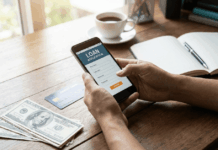
Every free phone with food stamps offer runs on one number: $9.25 a month. Carriers collect that Lifeline subsidy on your behalf, then build the phone and plan to fit inside it.
Voice-only lines get less money. Lifeline pays carriers a smaller amount for talk-and-text service, so the free plans worth taking almost always include data.



This guide is for SNAP households who keep seeing "free government phone" ads and sidewalk sign-up tents. You want to know what's real and how to keep the line once it arrives.
Can You Get a Free Phone With Food Stamps in 2026?
Yes. SNAP enrollment qualifies your household for Lifeline, the federal phone and internet discount overseen by the FCC, and the program is still running in 2026.
Lifeline is a federal benefit that gives eligible low-income households a monthly discount of up to $9.25 on phone or internet service.
Does SNAP Automatically Qualify You for Lifeline?
SNAP is a qualifying program, so you skip the income math entirely. A household qualifies when at least one person in it participates in SNAP or another qualifying federal program.
The National Verifier, the USAC system that checks Lifeline eligibility, may still ask for your current SNAP benefit letter or award notice if it can't confirm your enrollment on its own.
What If You Lose SNAP or Never Had It?
Households at or below 135% of the Federal Poverty Guidelines qualify without SNAP, and Medicaid and Supplemental Security Income also count, along with Federal Public Housing Assistance and the Veterans Pension.
Losing SNAP doesn't automatically end your phone. If your income still sits under that 135% line, the income route can carry you through your next recertification.
Where Does the Money for a Free Government Phone Come From?
The money comes from the Universal Service Fund, which pays participating carriers a fixed discount for each Lifeline subscriber every month.
Lifeline pays up to $9.25 a month for internet or bundled service and up to $5.25 a month for phone-only service, according to USAC's 2026 program materials.
Why Do Free Lifeline Plans Usually Include Data?
Carriers only collect the full $9.25 when the plan includes broadband that meets the FCC's minimum service standards. A talk-and-text line leaves $4 of subsidy unclaimed, so most offers bundle data.
My take: the $5.25 voice-only line suits almost nobody in 2026, since USAC allows one monthly discount per household and that slot could hold a $9.25 plan with data instead.
Is the Phone or the Plan the Real Freebie?
The plan is. I'd judge any offer by its monthly data, because the handset is simply the carrier's marketing cost for winning your $9.25 from USAC.
Expect a basic smartphone. Nobody is shooting a feature film on it, and that's fine.
Do Tribal Lands Get More?
Yes. Households on qualifying Tribal lands can get up to an extra $25, for a monthly discount of up to $34.25.
Should You Apply Through a Carrier or the National Verifier?
Apply through the National Verifier first, then choose a carrier. USAC requires it everywhere except the opt-out states of Texas and Oregon, and California providers moved onto it on February 1, 2026.
The National Verifier is the centralized system, run by USAC under FCC rules, that verifies Lifeline eligibility and handles annual recertification.
Why I'd Skip the Carrier Sign-Up Tent
I'd skip the carrier-first route, since every approved carrier draws the same $9.25 and you lose nothing by choosing one after USAC approves you.
Starting at the official Lifeline Support site keeps your SNAP letter, ID, and Social Security details inside one government system instead of a sales rep's tablet.
You also get to compare plans calmly at home, away from someone holding a clipboard.
What Documents Do You Need for a Free Phone With SNAP?
Have these ready as clear photos or scans:
- Proof of SNAP: your SNAP card, a recent benefit letter, or an award notice
- Government-issued photo ID, such as a driver's license
- Proof of address, like a utility bill or lease agreement
- Your Social Security Number or other identity proof for verification
Some carriers still ask for fax or mail submissions. Incomplete applications get delayed, so check that every page is readable before you hit submit.
What Happens After Approval?
Once approved, you contact a participating carrier and ask it to apply your Lifeline benefit to your account. The carrier ships a phone or gives pickup instructions, and you handle activation.
Which Lifeline Providers Offer Free Phones to SNAP Recipients?
Safelink Wireless, Assurance Wireless, Q Link Wireless, enTouch Wireless, and Life Wireless all offer Lifeline service, but availability depends on your ZIP code.
| Provider | Known for | Ask before signing up |
|---|---|---|
| Safelink Wireless | Wide coverage, basic smartphones | Which handset ships to your ZIP code |
| Assurance Wireless | Free monthly service, basic phone models | Price of optional upgrades |
| Q Link Wireless | Covers most states, simple online application | Whether your state is included |
| enTouch Wireless | Regional carrier with plan add-ons | Which add-ons apply where you live |
| Life Wireless | Several states, application support | What kind of sign-up help is offered |
Your ZIP code decides which of these carriers you can pick, so start every comparison there.
What Should You Compare Besides the Free Phone?
Compare monthly data and upgrade pricing. Most plans cover calling and texting, and some add voicemail or caller ID depending on the state.
I'd call Safelink, Assurance, and Q Link with the same ZIP code and ask each one for its exact monthly data number. Ten minutes on the phone beats a year on the wrong plan.
How Do You Keep Your Free Phone After the First Year?
You keep it by recertifying every year and staying the only Lifeline account in your household.
Since February 16, 2026, USAC runs an automated eligibility check first, and households it confirms don't need to do anything to keep the benefit.
I think the February 2026 change is the friendliest update in years, since a SNAP database match now replaces paperwork. Watch your mail anyway, because a failed match means manual recertification.
Common Mistakes That End a Lifeline Benefit
These slip-ups can cost you the line:
- Running two Lifeline accounts at one address, when only one discount is allowed per household
- Ignoring a recertification notice until after your benefit anniversary
- Staying quiet when SNAP ends, which can bring penalties for unreported changes
- Selling or giving away the phone, since Lifeline is for personal use only
What If You Move or Switch Carriers?
Lifeline benefits are portable. Moving to another state or switching carriers usually keeps you in the program, though you may need to reapply or resend documents.
Is ACP Coming Back, and What Is the FCC Changing in 2026?
No. The Affordable Connectivity Program paid up to $30 a month from a one-time congressional appropriation, and that money ran out in 2024.
The Congressional Research Service noted in August 2026 that no comparable federal broadband affordability program currently exists.
What Is in the February 2026 Lifeline Proposal?
On February 18, 2026, the FCC adopted a Notice of Proposed Rulemaking (FCC 26-8) to reform Lifeline, which costs nearly $1 billion a year.
Reply comments closed June 2, 2026, and the proposal was still under consideration as of August 2026. You can follow updates on the FCC's Lifeline consumer page.
I'd watch the address-level controls most closely, since the Congressional Research Service flagged in August 2026 that they could disenroll households that still qualify.
How Many Eligible Households Use Lifeline?
I find this the most surprising number in the program: USAC counted about 8.2 million subscribers in March 2026 against roughly 37.6 million eligible households.
That works out to a participation rate near 22%. If you're on SNAP without Lifeline, you're in the majority, and the fix takes one application.
Questions People Ask About Free Phones With Food Stamps
A few questions come up again and again once SNAP households start the Lifeline process.
- Q: Can two people in the same house each get a free phone with food stamps?
No. Lifeline allows one benefit per household, and a household means people who live together and share income and expenses. Roommates who keep separate finances may count as separate households. - Q: Is a free government phone completely free?
Carriers generally don't charge for the device or setup, and basic service is covered by the subsidy. Extra data or a better phone costs money, so read any upgrade offer slowly. - Q: Can I use my Lifeline benefit on home internet instead of a cell phone?
Yes. The $9.25 discount applies to broadband or bundled service, including home internet from participating providers. One discount per household means you pick one line or the other. - Q: What happens if I miss my Lifeline recertification?
You lose the benefit, and service can stop. You can apply again through the National Verifier, but you'll repeat the full approval process.
Conclusion
A free phone with food stamps comes down to one $9.25 monthly discount and how well you protect it. Get approved through the National Verifier first, then let carriers compete for that same subsidy on your terms.
Keep your address current, answer every recertification notice, and hold only one Lifeline account under your roof. Watch the FCC's 2026 Lifeline proposal too, because the rules you sign up under may not stay the same.