
A $500 instant loan with a $50 lending fee translates to an APR above 260%. That single number changes every calculation a first-time borrower runs in their head about quick cash.
Most guides on instant loans treat speed as the selling point and tack on a line about reading the fine print. Speed is real. But the pricing math behind that speed rarely gets broken down to where a borrower can see what they are trading for it.
This article is for the person Googling "instant loan" at 11 p.m. on a Wednesday because a car repair invoice landed two days before payday. That specific borrower has more options and less time than they think.
The APR Gap Between "Instant" and "Fast"
The word "instant" does real marketing work.
It separates a category of loans that charge 36% to 199% APR (and sometimes 300% to 700% for payday lenders) from standard personal loans that average around 12% to 14% APR for a three-year term, according to mid-2026 data from Bankrate and Credible.
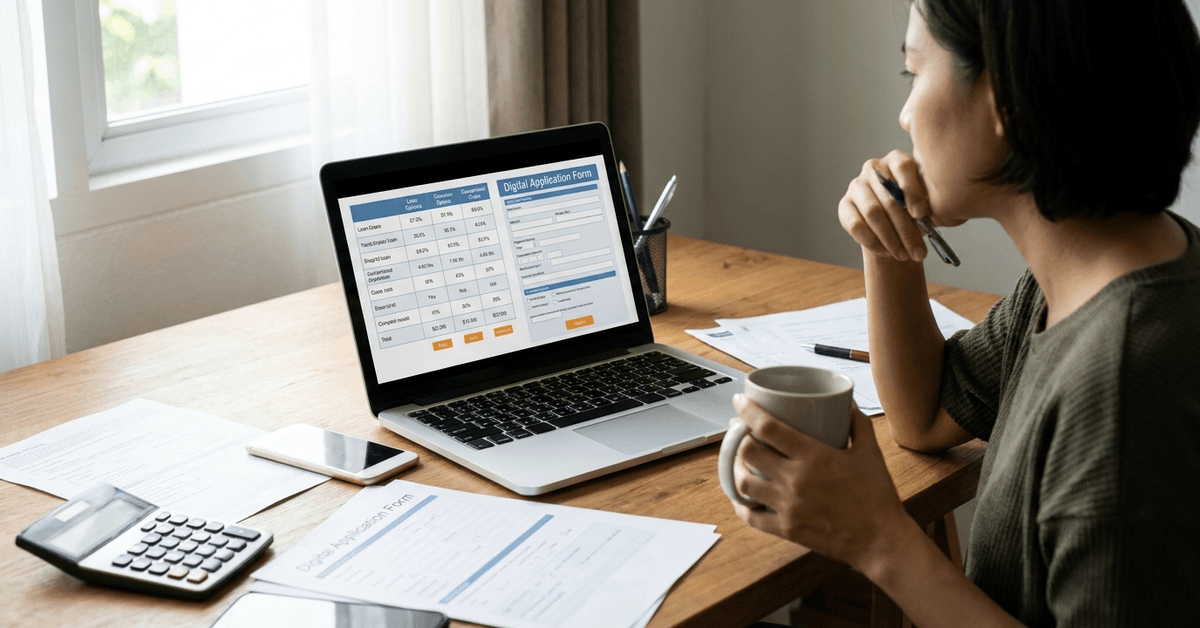
That gap is not just a rate difference. On a $2,000 loan repaid over 12 months, the total interest paid at 14% APR sits near $155.
The same $2,000 at 150% APR costs roughly $1,500 in interest alone. The borrower pays back $3,500 for a $2,000 problem.
Why "Instant" Usually Means "Less Screening"
Lenders charge more when they skip the underwriting that traditional loans require. Automated algorithms replace human review, soft credit checks replace hard pulls, and the entire process can close in minutes.
That tradeoff is what produces speed. The less a lender knows about the borrower's ability to repay, the higher the price tag on the money.
I would pick a lender like LightStream or Upgrade over any "instant" branded lender because both can fund within one business day at APRs between 7% and 35.99%.
One business day is not the same as one hour, but the difference between waiting 18 hours and saving $1,300 in interest is a trade I would take every time.
How the Application Process Works
Applying for an instant loan follows a compressed version of the standard personal loan process. The compression is where both the convenience and the risk live.
Steps to Expect
The typical flow involves six stages, though some lenders collapse a few together:
- Find a lender with published APR, fee schedule, and repayment terms. If those numbers are buried or missing, close the tab.
- Gather a government-issued ID, proof of income (pay stubs or bank statements), and bank account details for deposit.
- Complete the online form, which usually takes under 10 minutes for a straightforward application.
- Consent to a credit check. Soft pulls do not affect credit scores. Hard pulls do, and some lenders switch to a hard pull at approval.
- Review the offer. The APR, origination fee, late penalty, and total repayment amount should all appear on one screen.
- Sign electronically and wait for deposit, which can arrive same-day or next business day depending on the lender and your bank.
The Origination Fee Problem
One detail that changes the math: origination fees on instant and fast personal loans can run from 1% to as high as 12% of the loan amount. That fee gets deducted from the loan before it hits the bank account.
A $1,000 loan with an 8% origination fee delivers $920 in cash, but the borrower repays interest on the full $1,000.
Some lenders, including LightStream, charge zero origination fees. Others bury the fee in the APR disclosure. The difference between a 0% and an 8% origination fee on a $5,000 loan is $400 that never reaches the borrower's checking account.
Instant Loans vs. Standard Personal Loans: A Side-by-Side Look
Knowing the general differences is useful, but seeing them lined up makes the scale clearer.
| Feature | Instant/Payday Loan | Standard Personal Loan |
|---|---|---|
| APR Range | 36% to 700%+ | 7% to 36% |
| Funding Speed | Same day to hours | 1 to 3 business days |
| Origination Fee | 1% to 12% common | 0% to 8%, many charge none |
| Repayment Term | 2 weeks to 3 months | 24 to 84 months |
| Credit Score Required | Often none or very low | 580+ for most, 660+ for best rates |
| Rollover Risk | High, fees compound | None, fixed schedule |
The tradeoff is straightforward: speed and low entry requirements in exchange for dramatically higher total cost.
Who Should and Should Not Use Instant Loans
Instant loans get marketed as a fit for anyone in a financial bind. That framing is too broad.
Borrowers Who May Benefit
A narrow set of situations makes the cost math defensible:
- A borrower facing an expense that will cost more if delayed, like a car repair needed to get to work, where lost wages exceed the loan's total interest.
- Someone with no credit history and no access to a credit union, who needs a small amount (under $500) for a short period and has confirmed they can repay within the first term.
- A person who has already been denied by a personal loan lender and needs bridge funding to avoid a utility shutoff or eviction filing.
Borrowers Who Should Look Elsewhere
I think the advice to "use instant loans as a last resort" misses the real issue, because most people who take them out never checked whether a standard personal loan through a platform like Credible would approve them at a fraction of the cost.
A 2026 Credible marketplace analysis shows borrowers with fair credit qualifying for personal loans in the mid-to-high 20% APR range. That is still expensive, but it is a different universe from 199% or 400%.
Anyone with a credit score above 580 and two to three days before the bill is due should apply for a personal loan first. The funding timeline on many online lenders is now one to two business days.
Regulatory Protections to Know About in 2026
The Consumer Financial Protection Bureau (CFPB) oversees payday and short-term lending practices in the U.S. A rule that took effect in March 2025 limits how lenders can withdraw payments from borrower bank accounts, specifically targeting the practice of repeated withdrawal attempts on accounts with insufficient funds.
The Payment Withdrawal Rule
Lenders making covered loans (including payday, vehicle title, and high-cost installment loans above 36% APR) now face restrictions on failed payment attempts.
If two consecutive attempts to debit the borrower's account fail, the lender must obtain a new written authorization before trying again. This rule exists because repeated failed debits triggered overdraft fees that sometimes exceeded the original loan amount.
Cooling-Off Periods
Some states and countries give borrowers a cancellation window after signing a loan agreement.
Depending on the jurisdiction, this can range from 24 hours to 14 days. Not every state offers this protection, and not every lender makes it easy to find the policy.
Checking the loan agreement's cancellation clause before signing takes 30 seconds and could save the entire cost of the loan if the borrower finds a better option the next morning.
Weaker Enforcement Ahead
The CFPB's 2026 regulatory agenda signals a shift toward reconsidering existing payday lending rules.
The Bureau announced in March 2025 that it would deprioritize enforcement of certain payment provisions. For borrowers, this means less regulatory pressure on lenders and more reason to vet terms independently.
Alternatives That Cost Less
Before accepting an instant loan's terms, a few options are worth checking first:
- Credit union payday alternative loans (PALs): Federally regulated with APR caps, typically much cheaper than payday lenders. Application takes longer, but rates stay reasonable.
- Overdraft protection through a bank account, which may carry fees but usually costs less than a payday loan's interest.
- Payment extensions from creditors: A phone call to the billing company asking for a 7 to 14 day extension costs nothing and works more often than people expect.
- Earned wage access (EWA) apps: Some employers offer advance access to already-earned wages. The CFPB clarified in late 2024 that employer-facilitated EWA products meeting specific criteria are not classified as credit under federal law.
Each alternative has limits. PALs require credit union membership. Overdraft protection has its own fee structure. EWA depends on employer participation. But every one of them is cheaper than a 200% APR instant loan.
Questions People Ask About Instant Loans
A few searches keep coming up around this topic, and the answers are worth pinning down.
- Q: Does applying for an instant loan hurt my credit score?
The initial application usually involves a soft credit pull, which does not affect the score. But if the lender runs a hard pull at approval, that can drop the score by a few points. Late payments or defaults will cause further damage, and many instant lenders do report to credit bureaus. - Q: Can I get instant loan funds deposited on a weekend?
Rarely. A small number of lenders and banking partnerships support weekend deposits, but most transfers process through ACH, which operates on banking business days. Plan for Monday arrival if applying on a Friday afternoon. - Q: Are all fees disclosed before I sign?
Legally, they should be. The Truth in Lending Act requires APR and fee disclosure. In practice, some lenders bury fee schedules behind multiple clicks or use confusing language. If the total repayment amount is not visible on the offer screen, treat that as a reason to walk away. - Q: Is rolling over an instant loan ever a good idea?
Almost never. A rollover adds a new round of fees on top of the original balance. A $500 payday loan renewed three times could generate $150 or more in fees alone. If repayment on the original terms is not possible, contacting the lender to negotiate an extended payment plan is a better first move. - Q: Do instant loans help build credit?
Only if the lender reports to at least one of the three credit bureaus and the borrower makes every payment on time. Many instant and payday lenders do not report positive payment history at all, which means the loan carries all the risk of credit damage with none of the upside.
Conclusion
Instant loans solve a timing problem, but the price of that timing can quietly double the original expense. Borrowers with any credit history above 580 have cheaper options within reach at lenders funding in one to two days.
Checking a personal loan marketplace before signing a high-APR agreement takes five minutes and could save hundreds. The speed premium on "instant" only makes financial sense when every other door has already closed.